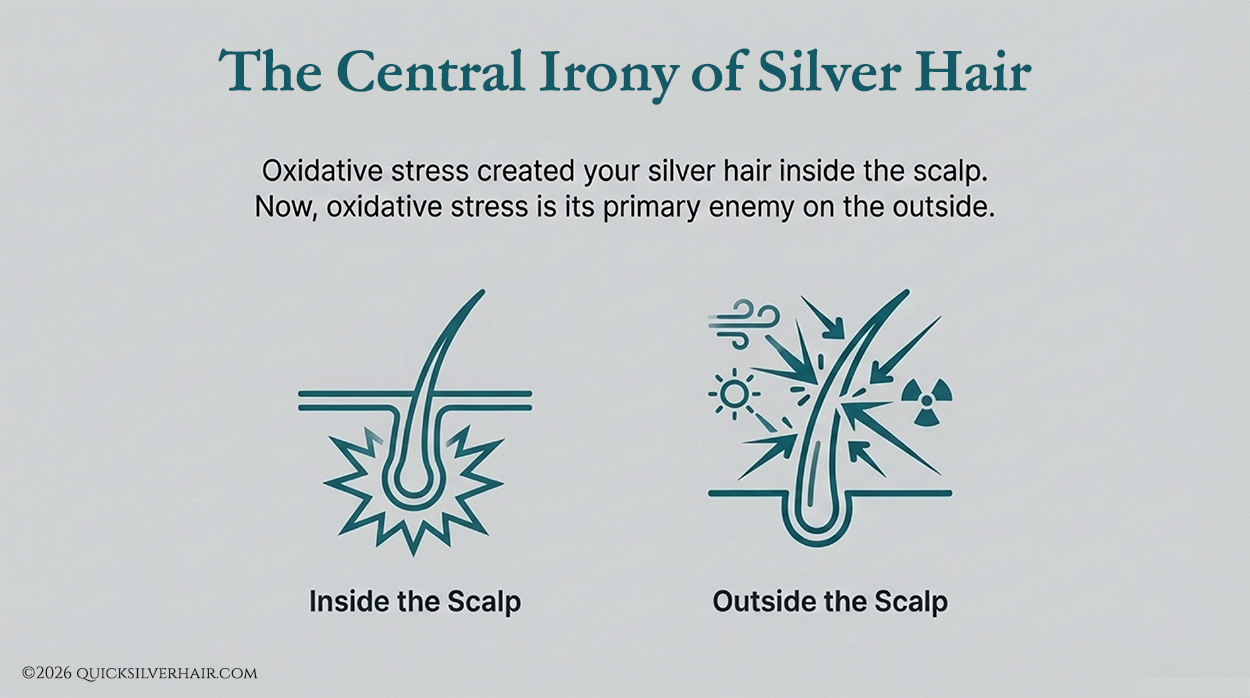
One of the most fascinating connections about gray hair that I have ever discovered…oxidative stress. Every silver hair on your head was created by oxidative stress. And the moment it emerges from your scalp, a second wave of oxidative stress begins.
The effects are cumulative, they take time, but it is often the person who is saying, “I don’t know what happened, it was fine, and then I just noticed it was suddenly yellowing.”
You cannot do much about the internal process of graying. But the science gets interesting when it comes to the external causes of oxidative stress and what you can actually do to protect your hair from them. We are diving into the science in this post and the corresponding video.
Table of Contents:
- Internal Oxidative Stress — How Silver Hair Is Born
- The Moment Gray Hair Leaves the Follicle, Everything Changes
- External Oxidative Stress — The Yellowing Culprits
- Losing the First Line of Defense Against Oxidative Stress
- Squalane: The Oil That Won’t Turn on Your Silver Hair
- The Good News: You Can Protect Your Silver Hair From Oxidative Stress
Disclosure: The product links in this post may be affiliate links. As an Affiliate, I earn from qualifying purchases, at no additional cost to you. Read my Terms and Conditions Page to learn more.
Click any product name I mention or the photo and the link will take you to the product page for purchase.
If you prefer my videos you can check out the corresponding video over on YouTube:
Internal Oxidative Stress — How Silver Hair Is Born
Oxidative stress happens when your body produces more free radicals (also called reactive oxygen species, or ROS) than it can neutralize. Inside the hair follicle, the main neutralizer is an enzyme called catalase. Its job is to break down hydrogen peroxide (H₂O₂) into harmless water and oxygen before it can cause damage.
As we age, the follicle produces less catalase. Hydrogen peroxide starts to accumulate. What happens next creates a chain reaction resulting in gray hair. [1][2][3]
The accumulated hydrogen peroxide damages the enzyme that produces melanin (tyrosinase) and triggers the programmed death of melanocytes, the cells that make pigment. In addition, it interferes with the actual chemistry of pigment production, even in cells that survive. Meanwhile, the follicle’s repair enzymes (methionine sulfoxide reductase), which normally fix oxidative damage to proteins, also decline with age. [3]
The result is a triple threat:
- Less protection up front
- Active interference in the middle
- Reduced repair capacity at the end
The hair shaft that emerges carries little to no melanin producing a white, silver, or gray hair.
For most of us with silver hair this process is genetic and/or age-driven. There is currently no proven reversal. Every layer of the follicle’s defense system weakens together, and that is not something a topical product can reach. The follicle has done what it does.
While the graying process is not always all or nothing, the body can sometimes slow or partially reverse this through health and stress changes. However, if you are graying primarily from genetics, this is largely a done deal.
The Moment Gray Hair Leaves the Follicle, Everything Changes
The irony at the center of this discussion: oxidative stress created your silver hair, and oxidative stress is now its primary enemy.
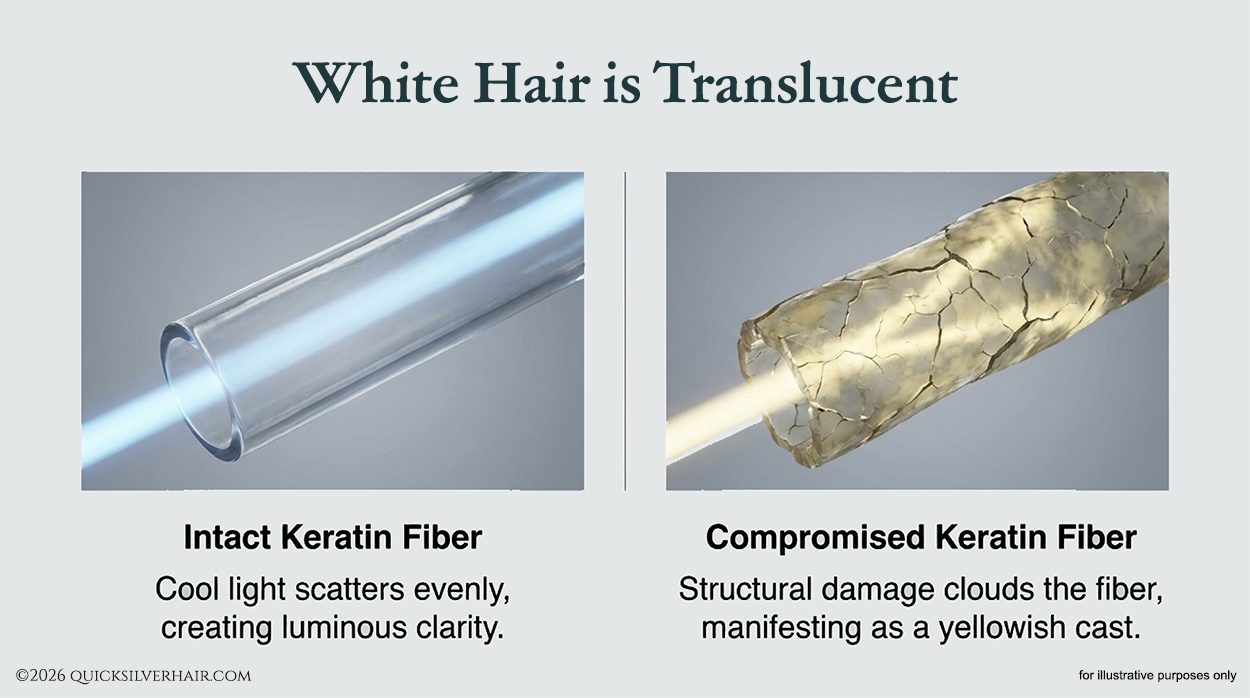
Here is what most people do not realize: white hair is not white. It is translucent.
There is no silver pigment, no white pigment. What you are seeing when you look at healthy silver hair is light interacting with the structure of a clear keratin fiber. When that structure is intact, it produces that cool, luminous quality that makes truly healthy silver hair so striking. Damage that structure and you lose the clarity; the fiber dulls and yellows.
Think of clear plastic. When it is new it is clear and smooth, light moves through it beautifully. If you have ever burned clear plastic or left it out in the sun, you know it will turn yellow, dry out, and become brittle. The plastic did not gain yellow pigment. The structural integrity producing clarity was compromised.
Your hair works the same way.
Pigmented hair has a built-in advantage: melanin acts as both colorant and protectant, absorbing UV radiation and shielding the hair from oxidative damage. [1] No hair color is fully immune to UV damage, but in silver hair there is no melanin to absorb even part of that insult, and the structural damage becomes visible. The darker your gray, the more residual protection you retain — but even salt-and-pepper hair is not immune to yellowing from oxidative stress.
From the moment silver hair emerges from the scalp, every environmental insult acts on completely unprotected keratin. [1][2]
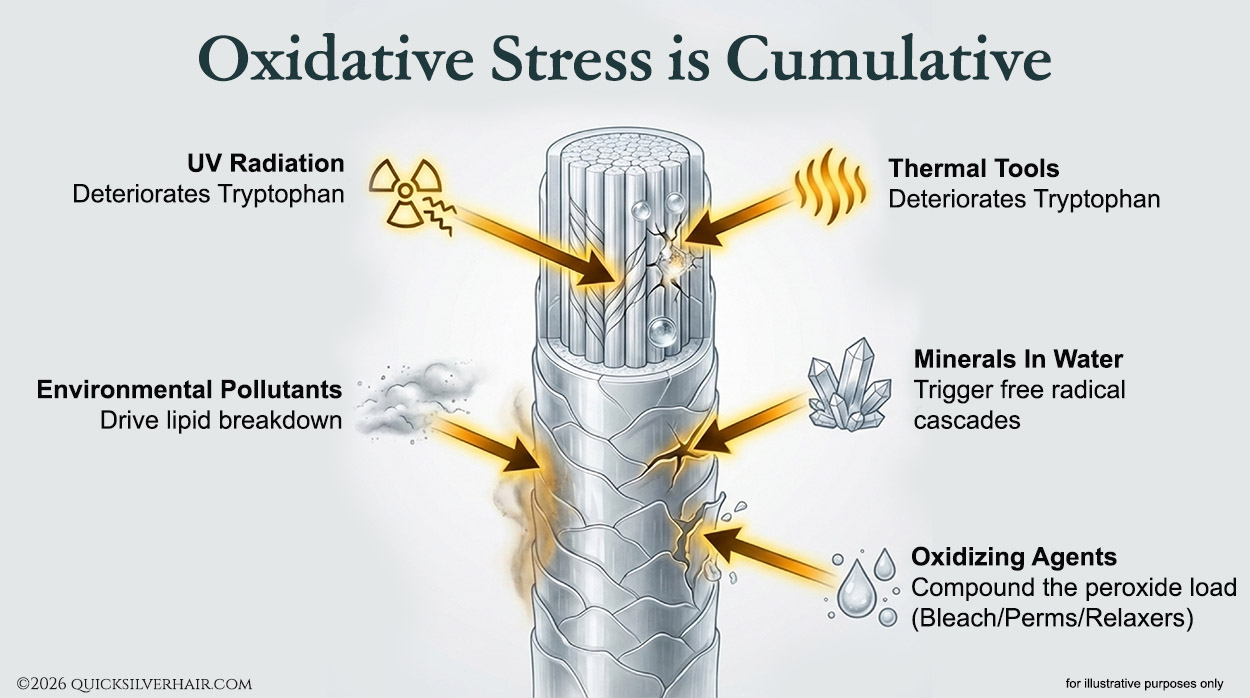
UV radiation, heat, hard water minerals, environmental pollutants, and oxidizing agents degrade the structure and lift the cuticle. As the hair becomes increasingly compromised, oxidative reactions begin generating actual yellow compounds within the keratin itself.
You cannot reach back into the follicle and change what happened there, and you cannot reverse damage that is already done. You can, however, protect new growth from the same fate.
External Oxidative Stress — The Yellowing Culprits
UV Radiation
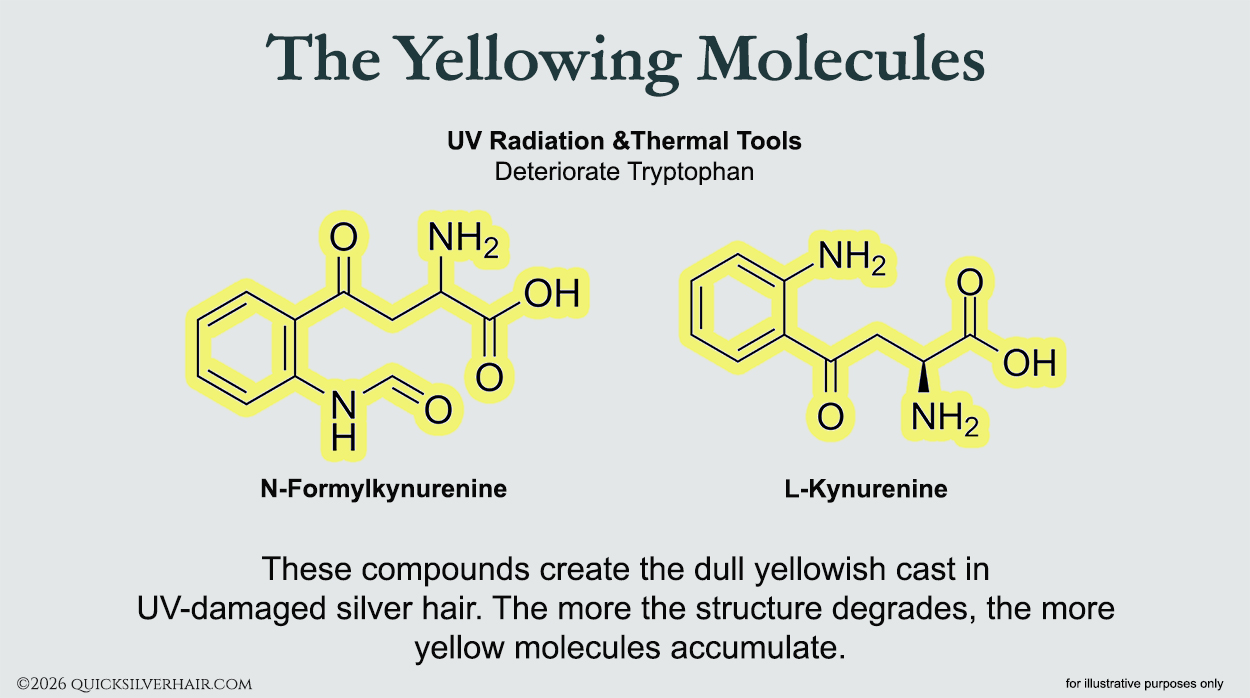
UV light is one of the most relentless sources of oxidative damage to silver hair. UV attacks specific amino acids in keratin, particularly tryptophan. Tryptophan breaks down into visibly yellow compounds called N-formylkynurenine and kynurenine. The yellower your white hair gets, the more of these compounds it contains. Without melanin, there is nothing intercepting this process. [4][5][6]
Photoyellowing likely involves multiple overlapping pathways — UV, heat, and environmental factors working together. But UV exposure is the one constant. We are all exposed to the sun, and silver hair absorbs the consequences without the protection and camouflage that pigment provides.
Heat Styling
Heat styling tools accelerate the same tryptophan breakdown that UV triggers. Research on styling temperatures in the range of 266–327°F (130–164°C) shows measurable yellowing. [6] Heat and UV work through the same pathways, and the fiber cannot distinguish between them. They compound each other.
Protecting from Heat
- Use a heat protectant that is rated up to a certain temperature, usually 450°F (232°C) (after that temp hair catches on fire so you don’t need more than that and your tool should definitely not be that hot.)
- Lower temperatures below 365°F (185°C) or lower to protect silver’s natural color as well as its structure. Heat is not just a breakage risk. It is a yellowing risk.

Environmental Pollutants and Smoke
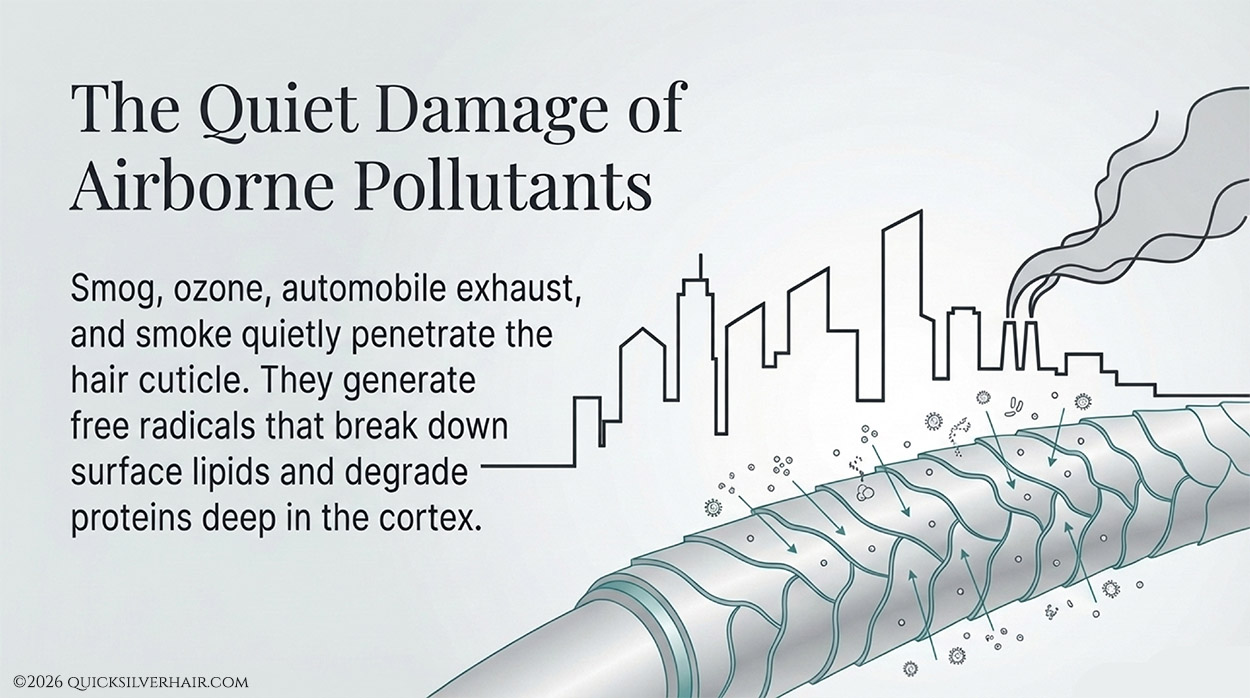
Airborne oxidants including ozone, particulate matter, automobile exhaust, and cigarette smoke penetrate the hair cuticle and generate free radicals inside the hair. These drive lipid breakdown on the hair surface and protein degradation in the cortex. [1] For those living and working in urban or industrial environments or areas with significant air pollution, this is an ongoing daily oxidative insult that accumulates quietly over time.
Water Damage and Silver Hair:
Water damage to silver hair comes from several issues. Hair is a natural fiber susceptible to water damage, just like any other natural fiber.
Mineral deposits and buildup
Hard water carries iron and copper ions that deposit into the hair fiber and trigger a free radical cascade that degrades keratin from the inside. Chlorine from pool water does similar damage through direct oxidation of keratin proteins. Both are ongoing, cumulative, and largely invisible until the damage is well established.
Wet hair is vulnerable hair
Hair is at its most fragile state when it is wet. Water is absorbed into the cortex, the cuticle scales lift to accommodate the swelling, and the hair moves into a softened, weakened state. Research consistently shows that wet hair has significantly reduced strength compared to dry hair. It stretches further before breaking and requires less force to damage. Every insult to wet hair (combing, brushing, towel friction, sleeping with wet hair) does significantly more damage than the same action on dry hair.
The damage is not dramatic or sudden. Aside from the immediate damage of breakage, water damage is slow, cumulative degradation of the cuticle through repeated mechanical stress on a softened fiber. Scales do not fully return to position; micro-abrasions progressively compromise the surface. The cuticle becomes less able to protect the cortex or defend against the oxidative insults from UV radiation, mineral deposits, and environmental pollutants.
Heat on wet hair is the worst offender
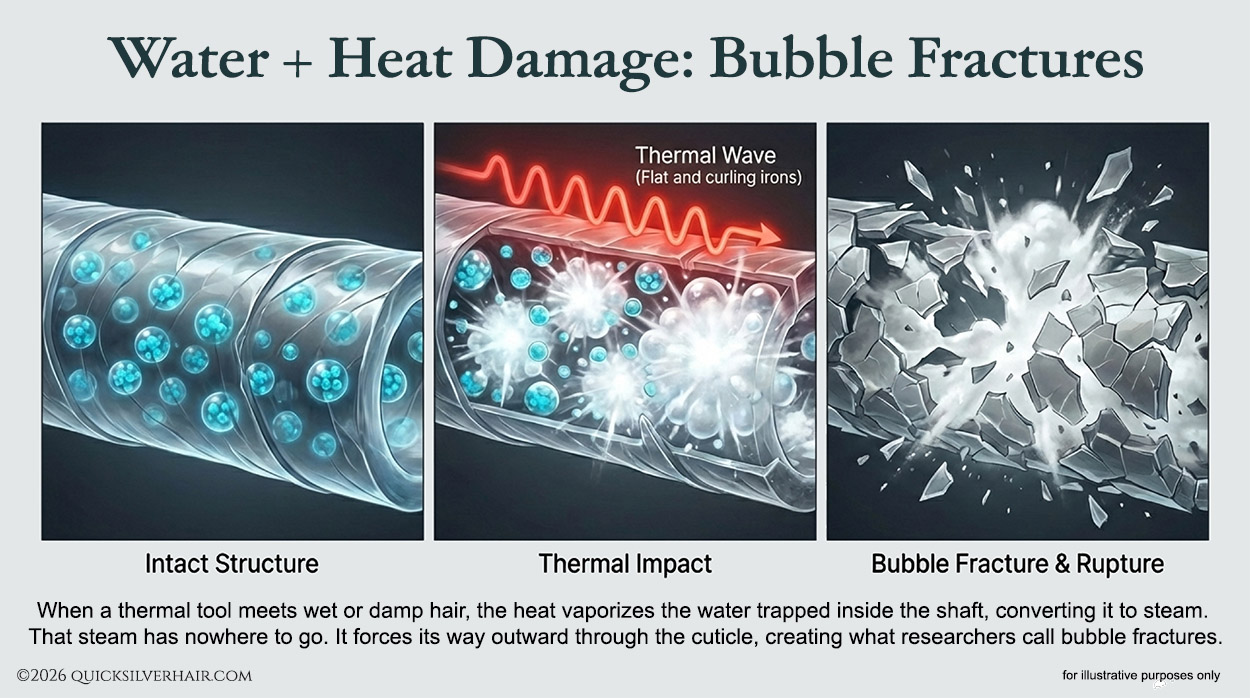
When a heat tool like curling irons and flat irons are applied directly to wet or damp hair, the heat vaporizes the water trapped inside the hair shaft, converting it to steam. That steam has nowhere to go. It forces its way outward through the cuticle, creating what researchers call bubble fractures: physical ruptures inside the cortex where steam has literally burst through the hair’s internal structure, leaving air-filled cavities where solid keratin used to be.
Research from TRI Princeton confirms that heat damage to wet hair begins at a significantly lower threshold than damage to dry hair — 320°F (160°C) for wet hair versus 356°F (180°C) for dry — precisely because of the destructive pressure of rapidly escaping steam.
That same research notes that heating hair anywhere in the range of 248°F to 392°F (120°C to 200°C) produces yellowing linked directly to protein oxidation: the same amino acid breakdown driven by UV exposure. Heat applied to wet hair accelerates that process. The hair is not only being fractured structurally, the chemistry of yellowing is being driven simultaneously from the inside. [8]
The Key Takeaway: wet hair is vulnerable hair.
- Mineral-laden water is an ongoing oxidative source.
- Thermal tools should never meet hair that is not fully dry
Silver hair is already operating without melanin’s protective buffer and without the natural sebum coverage that declines with age. It cannot afford the additional insult of steam pressure fracturing it from within.
The bottom line, all of these water related weaknesses to the hair and cuticle will leave it more susceptible to yellowing.
Oxidizing Products
Peroxide-based treatments (hair bleach, highlights, permanent hair color, relaxers, and permanent waves) initiate the same oxidative pathways on already-unprotected hair.
Using peroxide-based ingredients to whiten yellowing on silver hair will only lead to further yellowing and now the hair is weakened by the oxidative stress.
Hair bleach & highlights: Contains hydrogen peroxide (3-12% concentration), causes untargeted oxidative damage, breaks down melanin through oxidation, damaging the hair from the cuticle into the cortex.
Permanent hair color: Uses hydrogen peroxide (6-9% typical) as oxidizing agent, causes oxidative stress for your hair, damages hair structure, causes protein degradation. Also called “oxidative dyes.”
Permanent waves (perms): Uses hydrogen peroxide in the “neutralizer” or “fixing lotion” step to reform disulfide bonds.
Hydroxide relaxers (lye and no-lye): Use strong alkaline chemicals to break disulfide bonds and permanently alter the hair’s structure through oxidative processes, weakening the keratin and making it vulnerable to further oxidative damage.
Vitamin C treatments (clarifying treatments, color removal): Ascorbic acid oxidizes when exposed to air and heat, forming degradation products that undergo non-enzymatic browning reactions. If not thoroughly rinsed from hair, residual vitamin C caramelizes with heat styling (similar to browning sugar), turning hair yellow, orange, pink, or brown. [17]
You can learn more in my post on Vitamin C and Salon Treatments.
Every unnecessary oxidative exposure can damage delicate silver hair and adds to what is already a cumulative process.
Losing the First Line of Defense Against Oxidative Stress
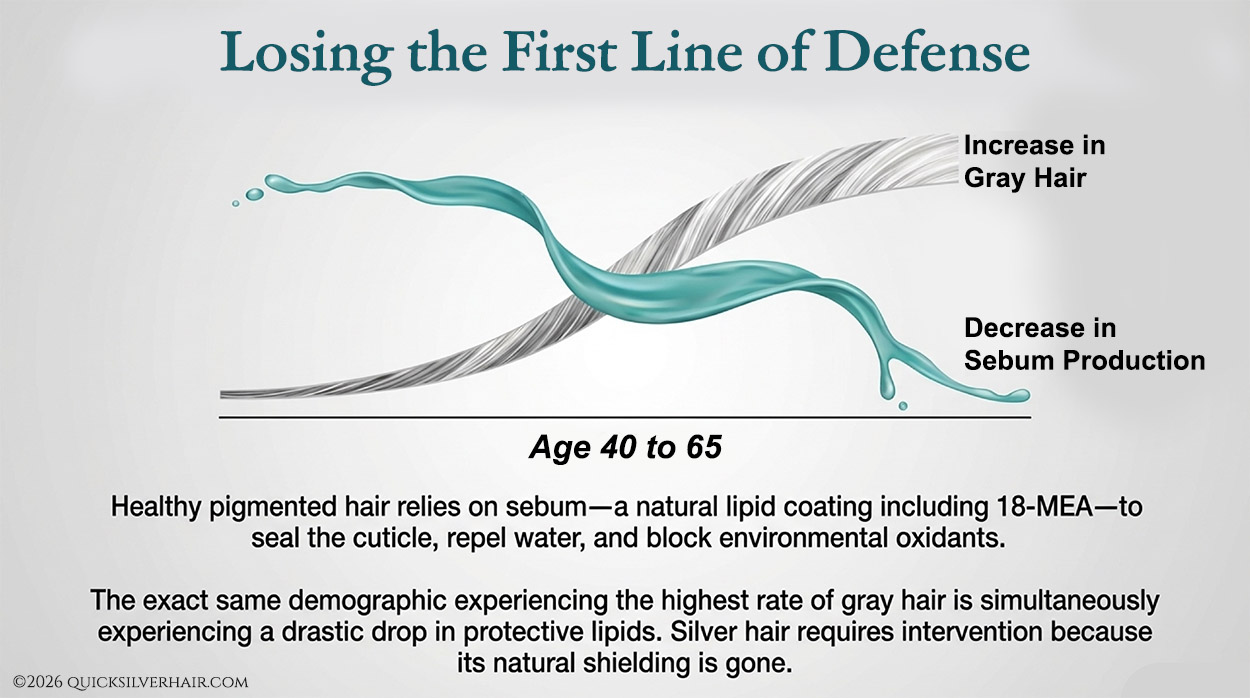
The scalp produces sebum, a natural lipid coating that travels down the hair shaft. Sebum protects the hair from environmental damage, seals the cuticle, and maintains surface integrity. It is silver hair’s first line of defense against external oxidative stress.
With age, sebum production declines significantly. Around age 40, a woman’s sebum production markedly declines, then dips again at age 65 during the transition phases of perimenopause and menopause. [9] The same woman experiencing gray hair is also losing natural lipid protection. Hair oils have become such a popular treatment category because they address a real, age-related biological loss.
Do Oils Work To Replace Sebum?
Not all oils are created equal on hair, oils are not chemically equivalent, and some can actively work against silver hair. Staining is not your only concern with using oils on silver hair. The question becomes: which oils work the best at helping add that protective layer that sebum provides, and which ones should you avoid?
Popular Plant Oils for Hair
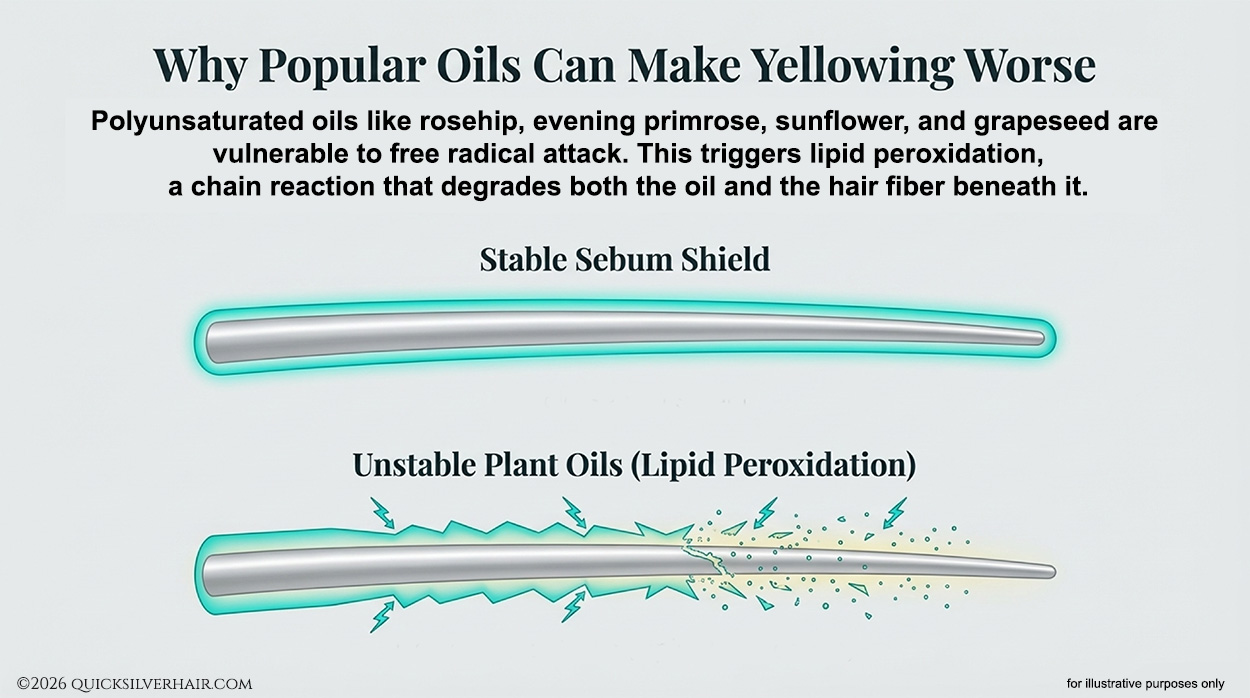
Most popular plant oils — rosehip, evening primrose, sunflower, or grapeseed — are polyunsaturated, meaning they contain chemical structures vulnerable to the same free radicals attacking your hair. When free radicals encounter an unstable oil on the hair surface, they trigger lipid peroxidation: a chain reaction that degrades both the oil and the fiber beneath it. [10]
Vitamin E Oil
Raw Vitamin E oil applied directly to hair is especially problematic. It functions as a sacrificial antioxidant — neutralizing free radicals by donating electrons, becoming oxidized itself in the process. On a dead hair fiber with no regeneration cycle, it simply oxidizes. You came looking for protection and inadvertently added fuel to the oxidative fire. Lipid peroxidation of surface lipids is documented in the hair oxidative stress literature. This is not theoretical. [1][2]
Blended into stabilized formulas, vitamin E is less problematic. But applying it neat — as some hair care advice suggests — is ill-advised for silver hair.
Jojoba Oil
Jojoba comes up often in this conversation because it genuinely does mimic sebum. It is technically a liquid wax ester, not a triglyceride oil, and its straight-chain ester structure gives it unusual resistance to oxidation, remaining stable even in high heat conditions. Natural vitamin E (specifically gamma-tocopherol) enhances this stability further. [7]
Here is the catch for silver hair specifically:
- Crude raw jojoba is golden to light yellow; a real potential for staining silvers.
- Refined jojoba oil removes that color, but it also strips away the vitamin E that provides the enhanced stability.
Squalane sidesteps this tradeoff entirely. It is colorless, fully saturated, and chemically stable without relying on any sacrificial antioxidant to stay that way.
Squalane: The Oil That Won’t Turn on Your Silver Hair
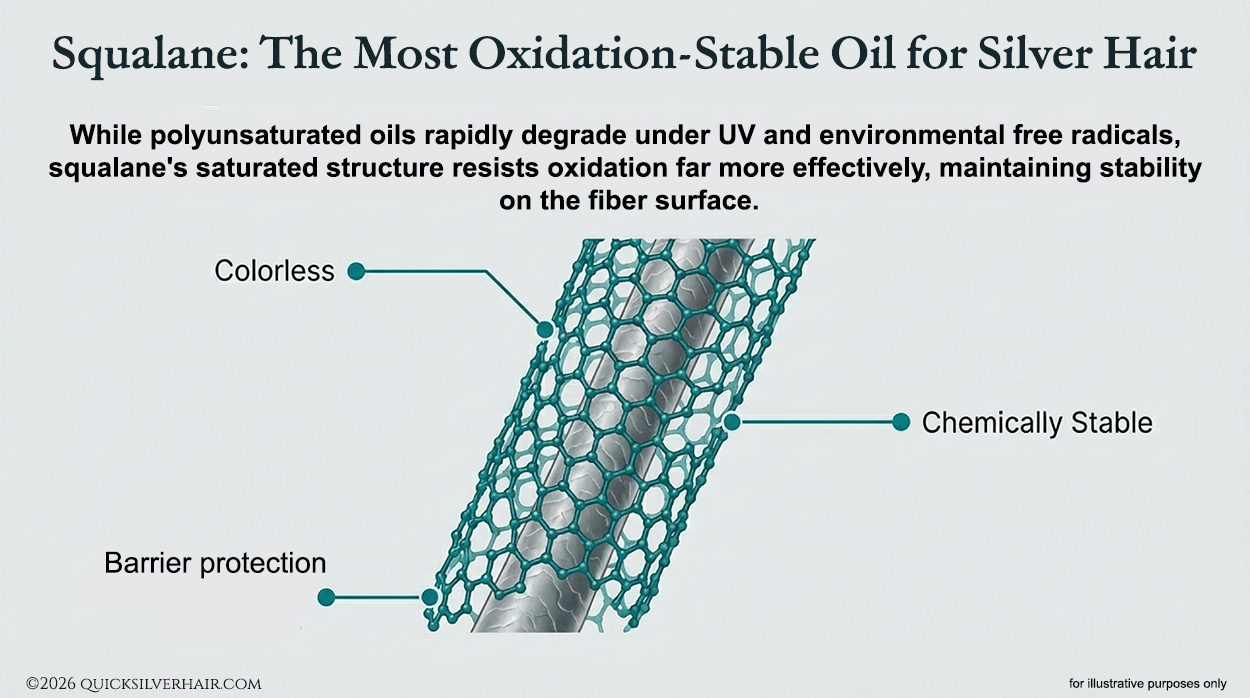
Squalane is a saturated hydrocarbon: fully hydrogenated, no vulnerable chemical structures. This means no sites for oxidative attack. While polyunsaturated oils rapidly degrade under UV and environmental free radicals, squalane’s saturated structure resists oxidation far more effectively, maintaining stability on the hair surface. Unlike antioxidants that sacrifice themselves in the oxidation process, squalane functions primarily as a physical barrier—it does not degrade in the same way, though under extreme conditions it can eventually oxidize.
It forms a stable lipid barrier that physically shields keratin from environmental oxidants. It mimics the hair’s natural surface lipid (18-MEA) which is depleted as we age and progressively stripped by UV, heat, chemical treatments, and mechanical damage over time. It restores the water-repelling property that healthy hair naturally has, and that damaged or silver hair tends to lose. It also reduces friction and the mechanical stress that compounds oxidative damage over time.
Other oils offer cosmetic benefits, and some have real merit for moisture and feel. However, when the specific problem is oxidative yellowing of unprotected silver hair, squalane is both colorless and oxidation-resistant, making it uniquely suited to silver hair. [11-16]
An oil that behaves like sebum must be stable enough that it does not react aggressively with environmental oxidants.
Squalane is the closest match to natural stable sebum:
- Stable enough that it does not react aggressively with environmental oxidants
- Naturally occurring in sebum itself
- Already produced by your body, your body recognizes it
- Restores the water-repelling property that healthy hair naturally has
- Topical use can replace what decreasing sebum production can no longer provide.
This is why squalane is one of QuickSilverHair’s Hero Products, and is appearing in more and more skin and hair care formulations.
The Good News: You Can Protect Your Silver Hair From Oxidative Stress
While all of this may sound dire, the truth is, understanding this primary driver of yellowing helped me protect my hair. What it gives us, as a community, is a way to protect our natural and beautiful silvers the best we can from oxidative stressors. Keep in mind that the longer your hair, the more likely you will have oxidative stress, even with protection, this is true for my hair, and I have done the best I can. Accepting what is, and that it cannot be removed, helps you to stop chasing products that promise reversal of a problem that cannot be reversed. Instead, you can take proactive measures to protect your new hair growth the best you can.
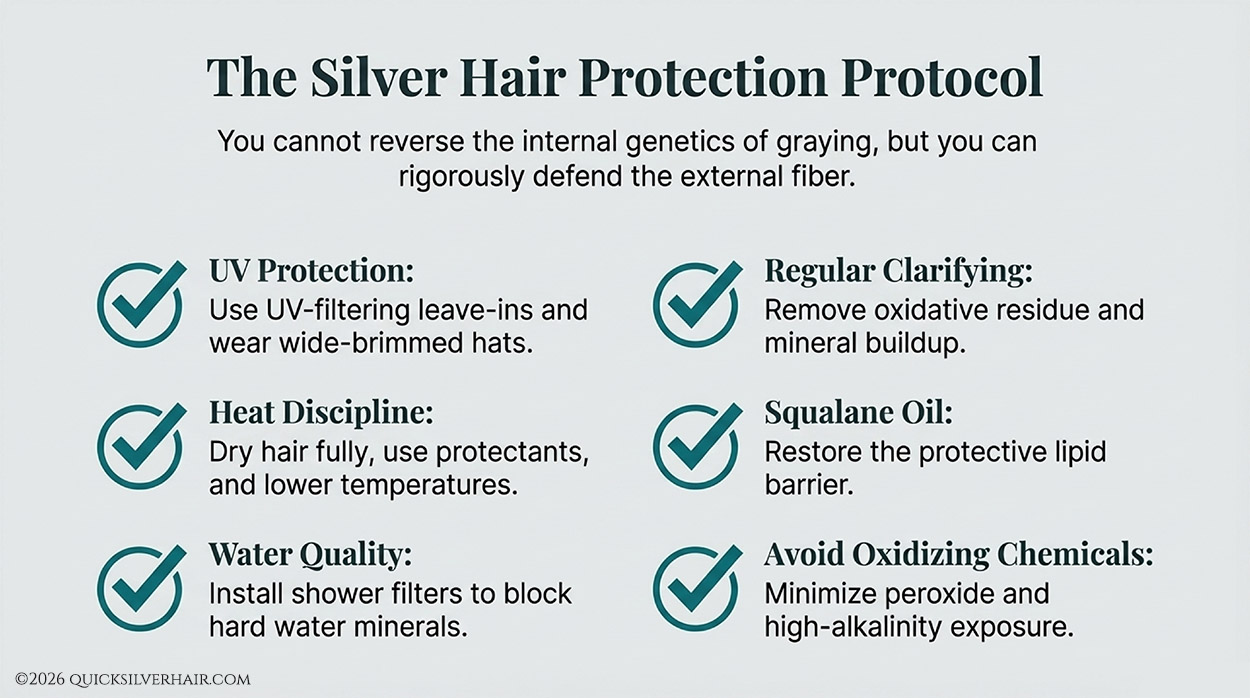
Here is what you can do today to begin protecting your hair:
UV Protection
Use UV-filtering leave-ins and sprays. Protect hair from direct sun exposure, particularly in peak hours. A wide-brimmed hat, an umbrella, or shade will protect your hair the best when out for prolonged times.
If you would like to learn more about sun damage and product recommendations head over to my Ultimate Guide on Sun Damage.
Heat Control and Protection
Lower temperatures as low as possible to achieve your style, especially on your direct heat tools like flat irons and curling wands. 365ºF or below is the ideal. Even better, is making sure your tools have modern heat sensors to control over-heating.
ALWAYS use heat protectant that forms a stable barrier before any thermal tool touches your hair. And make sure hair is completely dry before using any direct heat at all.
The diffuser on a hair dryer acts as heat protection, and most hair dryers should not be going over 250ºF so you should be safe for curly hair. If you do blowouts with your hair dryer, definitely make sure you use heat protection, as this is still a form of direct heat touching the hair during a blowout.
Hot Tip: Heat protection rated to a certain temperature has been lab tested to that temperature. If it says “heat protection up to 375ºF” then that means going over that temp you risk heat damage.
If you would like to learn more about heat damage and product recommendations head over to my Ultimate Guide on Heat Damage.
Product Spotlight:
One of the reasons I love SEEN Cremes and Leave-In is they all provide UV and heat protection. They also contain squalane oil and antioxidants to protect your hair from free-radicals.
Key Antioxidants in SEEN:
Bisabolol: Derived from chamomile, it acts as an antioxidant and soothing agent.
Moringa Oleifera Seed Extract: Known for its antioxidant properties.

Water quality
If you have hard water especially if it has high iron or copper content, a shower filter is worth considering. If you don’t know your mineral content in your water you can do a simple internet search with your city, state, zip and “water authority” to get your water report to find out what is coming out of your tap. Avoid water filters with vitamin C in them.
Regular clarifying
Removing mineral deposits and oxidizing product residue from the fiber is not just about buildup and weight. It is about clearing the oxidative load that accumulates on the surface of the shaft between washes. Chelating treatments help remove mineral buildup that has already deposited in the hair.
Product Spotlight:
My favorite shower filter is the AquaBliss Heavy Duty Shower Filter
A great chelating shampoo is Paul Mitchell Shampoo Two
Avoid unnecessary oxidizing treatments
Minimize peroxide exposure. Question any product with high alkalinity on unprotected white hair. Avoid all Malibu C, or Vitamin C based clarifying treatments on silver hair.
Squalane oil
A stable lipid barrier applied to clean hair addresses the surface vulnerability that makes silver hair uniquely susceptible to external oxidative damage. It replaces what declining sebum production can no longer provide.


Knowledge is power
This information was not gathered to scare you out of growing out or keeping your natural silvers. It certainly hasn’t stopped me from enjoying my gray hair, and I do have oxidative stress. My hair is very long, the ends are 4-5 years old, it just can’t be prevented all together, but I do my very best to protect it as much as possible.
You did not choose the oxidative stress that created your silver hair. But from the moment that hair emerged from the follicle, you have choices. Understanding the mechanism…inside and out…is what separates reactive hair care from intentional hair care. Not everyone will have a severe issue with oxidative stress, your hair type and color play a major role in how resilient and resistant it is against oxidative stress.
If the damage is already done, purple shampoo, conditioners, or mask will help you get it grown off. Using the information provided in this research will help you protect new growth and prevent more severe issues in the future.
I hope you found this helpful and you can check out my glossaries in the main menu for more information on all things yellowing, heat damage, and sun damage.
I hope you found this post educational and helpful.
Thank you for reading. Please feel free to share.
As always it is about so much more than the hair.

§
Find me on your favorite social media platform. Please remember to engage: comment, like, share, and follow.
Read More Silvery Articles
Sources:
[1] Trüeb, Ralph M. “Oxidative Stress in Ageing of Hair.” International Journal of Trichology, Jan–Jun 2009; 1(1): 6–14. https://pmc.ncbi.nlm.nih.gov/articles/PMC2929555/
[2] Du, Fanpan et al. “Oxidative stress in hair follicle development and hair growth: Signalling pathways, intervening mechanisms and potential of natural antioxidants.” Journal of Cellular and Molecular Medicine, June 2024; 28(12): e18486. https://pmc.ncbi.nlm.nih.gov/articles/PMC11196958/
[3] Wood, JM et al. “Senile hair graying: H₂O₂-mediated oxidative stress affects human hair color by blunting methionine sulfoxide reductase repair in graying hair follicles.” FASEB Journal, 2009. https://pubmed.ncbi.nlm.nih.gov/19237503/
[4] “Photo yellowing of human hair” (2007). https://www.researchgate.net/publication/6210053_Photo_yellowing_of_human_hair
[5] “Yellowing and bleaching of grey hair caused by photo and thermal degradation” (2012). https://www.researchgate.net/publication/263293694_Yellowing_and_bleaching_of_grey_hair_caused_by_photo_and_thermal_degradation
[6] Tryptophan photodegradation mechanism study. PubMed, 2013. https://pubmed.ncbi.nlm.nih.gov/23614335/
[7] “Jojoba Oil: An Updated Comprehensive Review on Chemistry, Pharmaceutical Uses, and Toxicity.” PMC8197201. https://pmc.ncbi.nlm.nih.gov/articles/PMC8197201/
[8] Cranwell, Philippa and Cornwell, Paul. “Hair Heat Protection Claim Support 101.” TRI Princeton, 2023. https://www.triprinceton.org/post/hair-heat-protection-claim-support-101
[9] Malinauskyte, E. “What types of lipids do we seek for hair?” TRI Talk, TRI Princeton, November 30, 2022.
[10] Ayala, A., Muñoz, M. F., & Argüelles, S. (2014). Lipid peroxidation: production, metabolism, and signaling mechanisms of malondialdehyde and 4-hydroxy-2-nonenal. Oxidative medicine and cellular longevity, 2014. https://pmc.ncbi.nlm.nih.gov/articles/PMC4066722/
[11] Weis, M., et al. (2025). “Comparative Study of Squalane Products as Sustainable Alternative to Polyalphaolefin: Oxidation Degradation Products and Impact on Physicochemical Properties.” Lubricants, 13(2), 48. https://doi.org/10.3390/lubricants13020048
[12] Karna, E., et al. (2025). “Squalane as a Promising Agent Protecting UV-Induced Inhibition of Collagen Biosynthesis and Wound Healing in Human Dermal Fibroblast.” International Journal of Molecular Sciences. https://pmc.ncbi.nlm.nih.gov/articles/PMC12073650/
[13] Lai, M.C., et al. (2025). “Utilizing Lipid Bond Technology With Molecular Lipid Complex to Provide Lipid Treatment for Damaged Hair.” Dermatology Research and Practice. https://pmc.ncbi.nlm.nih.gov/articles/PMC12352994/
[14] Jones, L.N., et al. (1997). “The role of 18-methyleicosanoic acid in the structure and formation of mammalian hair fibres.” Micron, 28(6), 469-485. https://pubmed.ncbi.nlm.nih.gov/9519472/
[15] Fernandes, M.M., & Cavaco-Paulo, A. (2023). “Hair Lipid Structure: Effect of Surfactants.” Cosmetics, 10(4), 107. https://doi.org/10.3390/cosmetics10040107
[16] Cosmetic Ingredient Review (CIR) Expert Panel. “Safety Assessment of Squalane and Squalene as Used in Cosmetics.” https://www.cir-safety.org/sites/default/files/Squalene%20and%20Squalane.pdf
[17] Yuan JP, Chen F. Degradation of ascorbic acid in aqueous solution. J Agric Food Chem. 1998;46(12):5078-5082. doi:10.1021/jf9805404 https://pubs.acs.org/doi/10.1021/jf9805404
*Affiliate Links:
QuickSilverHair is a participant in the Amazon Services LLC Associates Program. Some of the links on this site are affiliate links to Amazon.com. I earn money as an Amazon Associate from qualifying purchases.
QuickSilverHair is an affiliate with several brands, I earn a small percentage from any qualifying purchases, at no additional cost to you.
© Copyright disclaimer: All content is written by Joli A. Campbell or Guests, that content belongs to QuickSilverHair or the respected author. All Images in this blog belong to the women in the picture, myself, or were used with purchase or commercial permissions. I have used their images and names with their permission. Please do not copy or redistribute anything from this site without further permission. Thank you.
QuickSilverHair.com content disclaimer: content is provided for general information purposes and should not be considered medical advice. Product information is not intended to diagnose, treat, cure or prevent any disease. The hair care content is also for educational use, I am not a hair care professional or dermatologist, please be careful with your hair and skin. If you have any hesitations or concerns speak to your doctor or hair care professional for their support before using any information you find on this site. Be well.
For full Affiliate and Copyright Details Please Read My Terms & Conditions Page