Every year in January I see a new rush to get that dye off your hair as fast as possible. I totally understand—you’ve finally committed to going gray and letting your silvers shine. You want to get there as fast as you can, but stop and listen. I got you, and I don’t want you to have a disaster that ruins this experience. Trust me when I say that over the last decade I’ve seen the worst situations happen, and they can be heartbreaking and stressful.
If you’re contemplating how to get that dye off your hair, the temptation is real. The promise of color removers sounds appealing—strip away years of dye in minutes and reveal your natural gray underneath. But before you reach for that box of Color Oops or start mixing up a DIY concoction you found online, let’s talk about what actually happens during color removal and whether there’s a better path forward.
Table of Contents:
- The Reality of Dye Removal: It’s Not What You Think
- The DIY Methods You’ll See Online (And Why I Don’t Recommend Them)
- Please Don’t Mix These Ingredients
- Why Commercial Color Removers Aren’t Much Better
- Understanding What Permanent Dye Does (And Why Removal Is So Complicated)
- When Color Removal Might Make Sense
- A Better Alternative: Gray Blending
- The Cold Turkey Grow-Out: Simpler Than You Think
- Making Your Decision
- The Bottom Line
Disclosure: The product links in this post may be affiliate links. As an Affiliate, I earn from qualifying purchases, at no additional cost to you. Read my Terms and Conditions Page to learn more.
Click any product name I mention or the photo and the link will take you to the product page for purchase.
The Reality of Dye Removal
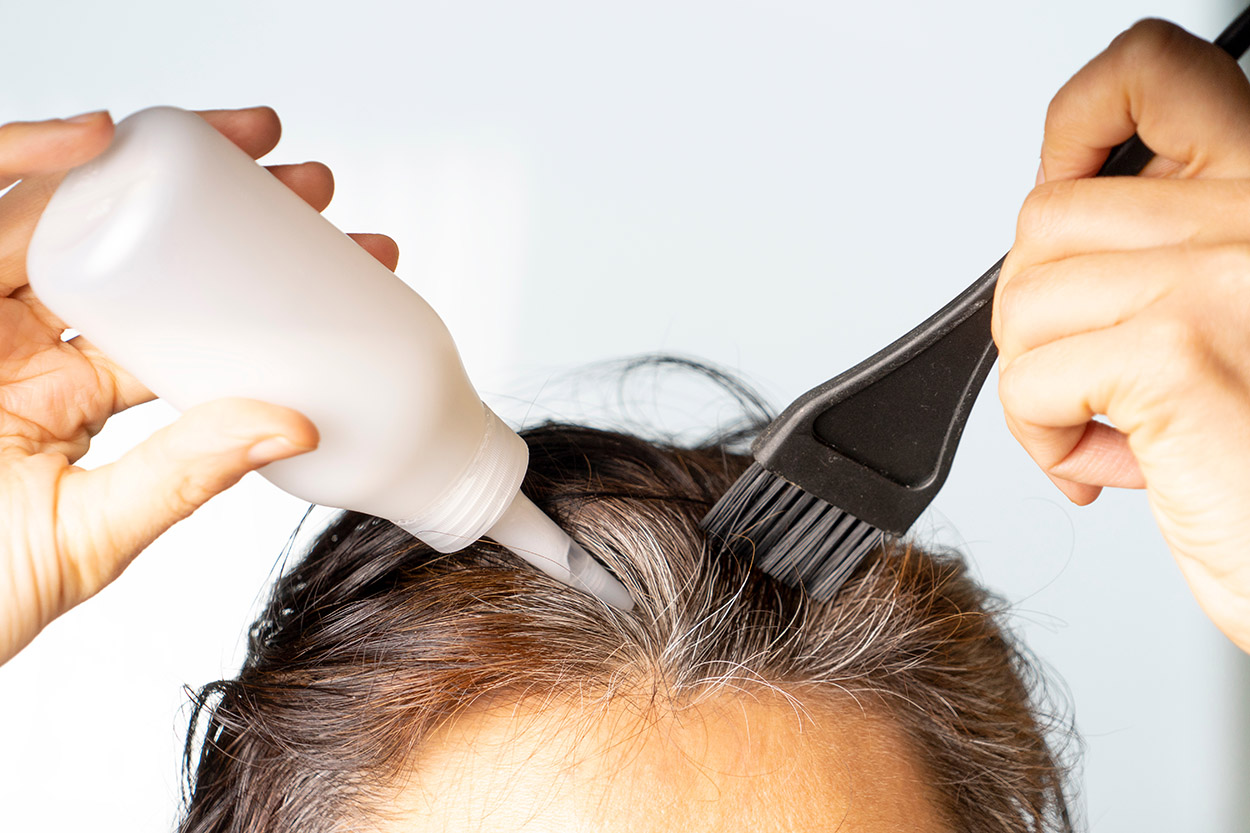
The hard truth: color removal doesn’t restore your hair to its pre-dye condition. Whether you use a commercial color remover, bleach, or one of those internet-famous DIY methods, you’re adding another chemical process to hair that’s already been through years of processing.
What happens during color removal:
- Commercial reducers shrink artificial dye molecules so they can be rinsed out
- Bleach and lighteners break down melanin in your hair shaft
- Your hair becomes more porous and often in worse condition than before
- You’re left with permanently altered hair color and structure
The dye fades off—but you’re left with hair that’s been stained by years of color plus the removal process itself can cause damage. The result usually isn’t the natural gray you’re hoping for—it’s compromised hair that will still need to be grown out.
The Online DIY Methods to Strip Hair Dye
The internet is full of “natural” dye removal recipes. I’ve watched way too many women in our silver hair community try these methods, and the results usually aren’t what you are expecting. Here’s an easy way to understand what dye does to gray hair: any dye that contains the word “permanent” (including semi and demi) will permanently stain your natural gray hair.
These DIY methods won’t actually remove that stain, and they risk damaging your beautiful emerging silvers. The darker your dye the more pronounced this damage will be.
The Vitamin C Method
You’ll find countless tutorials showing people mixing crushed vitamin C tablets with shampoo to “fade” hair dye. The first thing I always think when I see the crushing of tablets: why are we crushing expensive vitamin c tablets, it does come in powdered form. I digress.
While vitamin C (ascorbic acid) might fade some direct dyes on previously bleached hair, it won’t remove dye from your natural gray. The method is not actually effective at removing dye. In addition, the tablets often contain added dyes that can turn your hair pink, orange, or yellow—the opposite of what you want.
More concerning, the acidity of vitamin C can damage your scalp and hair by stripping away natural oils, causing dryness and irritation, and “blasting open” the hair cuticle. And mixing vitamin C with other ingredients creates unpredictable chemical reactions. When combined with peroxide or baking soda, you can create a corrosive acid strong enough to remove lime buildup from your faucet. That’s not something I’d ever recommend putting on hair you’re trying to protect.
Dandruff Shampoo
Some guides recommend dandruff shampoo for color removal. The problem? Salicylic acid, a common ingredient in dandruff shampoos like Head & Shoulders, has been known to turn silver hair distinctly pink. Tar-based formulas will definitely stain your hair.
Additionally, medicated dandruff shampoos are formulated to treat specific scalp conditions like seborrheic dermatitis or fungal infections. If your scalp is healthy and free of these issues, you really don’t need to be using medicinal products, they can disrupt your scalp’s natural balance and cause unnecessary irritation.
Dish Soap
Dish soap contains the same heavy-duty sulfate detergents used in laundry products. They can strip your hair leaving it dry, vulnerable to discoloration, breakage, and frizz. The damage outweighs any temporary color-fading effect.
Peroxide or Bleach
Using developer (peroxide) or bleach on gray hair might be the most disappointing choice of all. I’ve seen this happen in our community, and I even tested it myself to show what occurs. While bleach removes color from your hair it always leaves anything from a blonde tone to banana yellow. This is why your gray hair turns permanently yellow, rather than returning to its virgin state. Even if you bleach white hair, it will turn yellow. This damage is permanent and cannot be removed—only grown out or covered and maintained with repeated applications of toner until you grow out the bleach damaged hair.
Please Don’t Mix These Ingredients
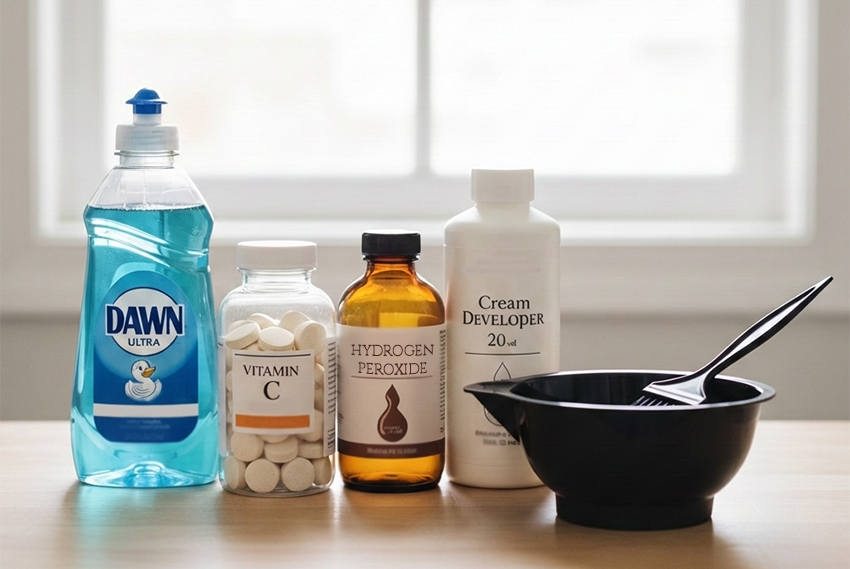
I need to give you a serious warning: Never mix home remedies like baking soda, vitamin C, developer, dandruff shampoo, dish soap, and other ingredients to remove hair dye or yellowing from your silvers. These DIY concoctions won’t remove the dye—they’ll leave you with orange hair, severely damaged strands, and contribute to yellowing rather than removing it.
Beyond damaging your hair, these harsh chemical combinations can seriously harm your delicate scalp. They strip away your skin’s protective oils and create corrosive solutions that can burn, irritate, or cause lasting damage far worse than waiting out a grow-out period.
Overusing or combining these remedies can permanently alter your hair’s pH balance, leading to dry, damaged hair, permanent discoloration, and even the dreaded “chemical haircut”—where hair becomes so damaged it breaks off.
Why Commercial Color Removers Aren’t Much Better
Professional and drugstore color removers (like Color Oops or Color B4) don’t work the way most people hope. They shrink and remove artificial dye molecules, but they can’t restore your natural hair color. When permanent dye was first applied to your hair, it lifted (lightened) your natural pigment before depositing the new color. That lifting process permanently altered your hair—and color removers can’t undo that damage.
The typical result after using a color remover is orange, dry, and brittle hair—especially when removing darker colors like black or dark brown. The remover takes you back to the “base” color that was created during the original dyeing process, which reveals underlying warm tones. With black dye, this usually means a dark orange or coppery color.
If you’ve been using box dyes, there’s an added problem. Many drugstore hair colors contain metallic salts (copper, silver, lead) that create a buildup on your hair shaft. These salts cause progressive darkening with each application, contribute to ongoing dryness and breakage, and can create dangerous chemical reactions—including heat, smoke, and melting hair—if you later try to bleach or professionally color your hair.
With semi- and demi- permanent dyes you may get the saturation of color off, but what remains will likely still be your natural color stained or tinted.
Understanding What Permanent Dye Does (And Why Removal Is So Complicated)
To understand why removal is so problematic, it helps to understand what permanent dye does in the first place. Permanent color must damage your hair to work. It combines dye with developer (peroxide), which lifts your natural color through oxidization while depositing new pigment into the hair shaft. This permanently alters your hair’s structure and color at a molecular level. Meaning: your natural silvers are no longer under that dye.
Here’s what many people don’t realize: Demi-permanent and semi-permanent dyes also permanently stain natural gray hair, especially white hair and higher porosity hair. While they may fade on previously colored hair, they don’t wash out of your natural color. This is why working with gray hair has been such a learning curve for stylists—having clients who want to preserve their natural silver without staining is relatively new territory.
The only way to truly “remove” semi-permanent, demi-permanent, and permanent dyes is by bleaching, which permanently alters both the dyed hair color and your natural color. What remains after any removal attempt is permanently changed hair—often orange, yellow, or unevenly colored—that still needs to be grown out anyway.
A Note About Henna: henna is considered a permanent hair dye. It does not react the same with synthetic based dyes, bleaches or developer. The best practice with henna is do not add any other hair coloring products to it because it contains metallic salts that are unpredictable with synthetic coloring agents. It will become even more unpredictable with home remedy style fading recipes.

When Color Removal Might Make Sense
I’m not saying color removal is never an option. For some people in specific situations, it can be a helpful tool:
Consider color removal if:
- You have temporary colors on your hair, often these brands offer a remover that is more like clarifying shampoo than anything else.
- You have very short hair and plan to cut most of the length anyway.
- You understand you’re trading one type of damage for another.
- You’re willing to accept permanently altered, likely yellowish or orangeish hair that will need to be grown out or redyed.
Do not use color remover if:
- You have longer hair you want to keep healthy and long.
- You have really dark hair or multiple applications of permanent dye.
- Your hair is already compromised.
- You expect removal to give you “natural-looking” hair (it won’t).
- You have visible white or light gray hair you’re hoping to protect.
A Better Alternative: Gray Blending
If you’re ready to ditch the dye, you are willing to be patient with the process, but aren’t ready for a harsh demarcation line or the risk of damaged hair from removal attempts, let me introduce you to a technique that’s transforming transitions: gray blending.
Gray blending is a lower-maintenance hair coloring technique that strategically integrates your natural gray hair with highlights and lowlights to create a gradual, natural-looking transition. Unlike permanent dye or removal attempts, this customized process works with your emerging silvers, not against them.
What makes gray blending different:
- It’s a multi-phase approach taking 6-9 months.
- Drastically reduces salon visits compared to constant root touch-ups.
- Eliminates harsh regrowth lines.
- Works with all hair colors and textures.
- Allows you to ease into your natural color gradually.
- You can maintain this look long-term or continue until fully gray.
- Far less damaging than an “overnight transition.”
Gray blending is perfect if you’re a professional who needs to look polished during the transition, or if you have major events coming up—weddings, vacations, important photos—where a harsh demarcation line would stress you out. You won’t have to live life around your dye schedule or hiding the grow out.
If you’d like to learn more about this approach, I have a comprehensive interview with gray blending expert Karla Osborne that covers everything from the process timeline to finding the right colorist.
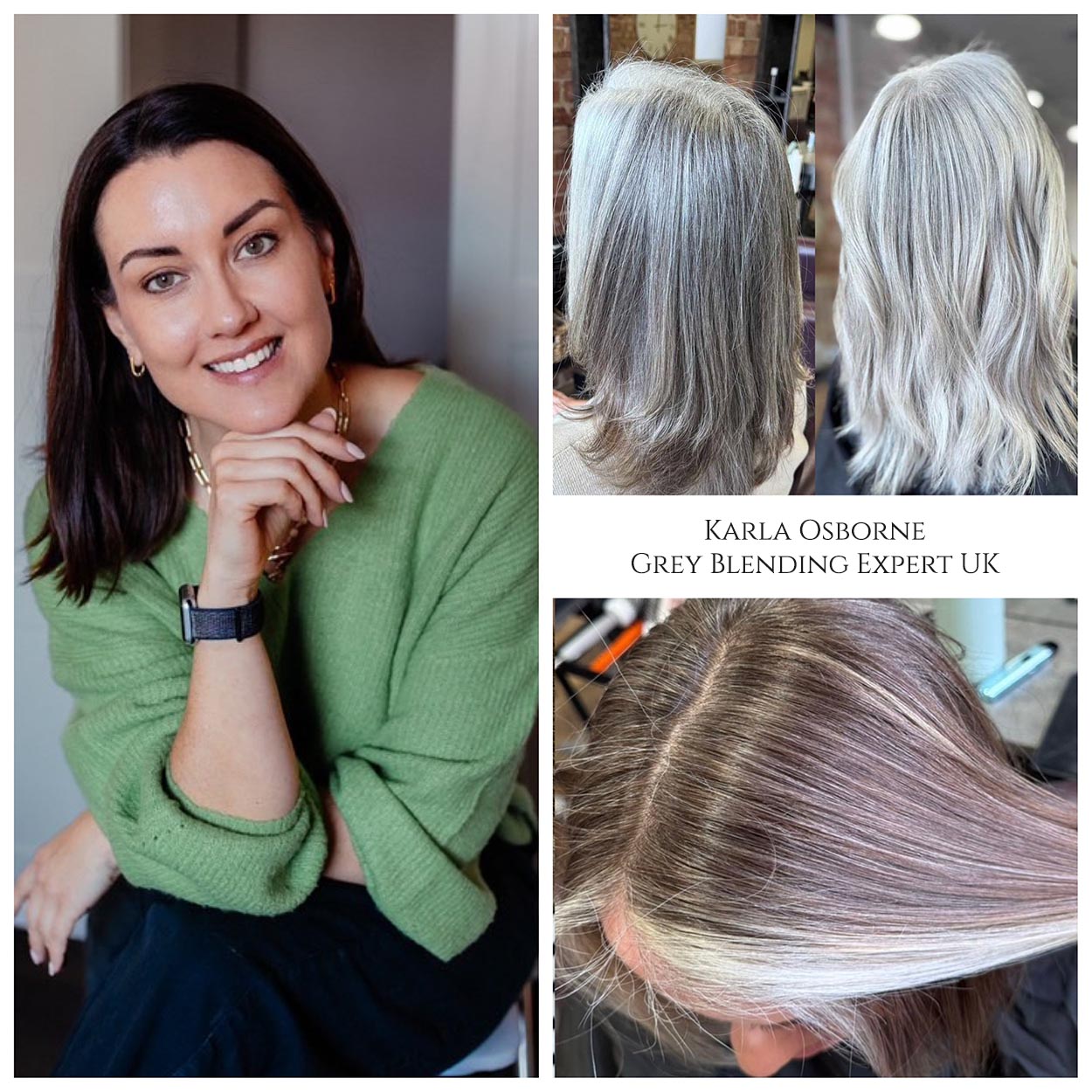
London-based gray hair specialist Karla Osborne explains: “Gray blending is about moving away from heavy artificial hair color into something more natural, blended, and softer. When your white hair comes through at the root and you’ve been coloring your hair dark, there’s a stark contrast. I break that line by mimicking the white hair naturally coming in at the root and placing those strands down into the lengths.”
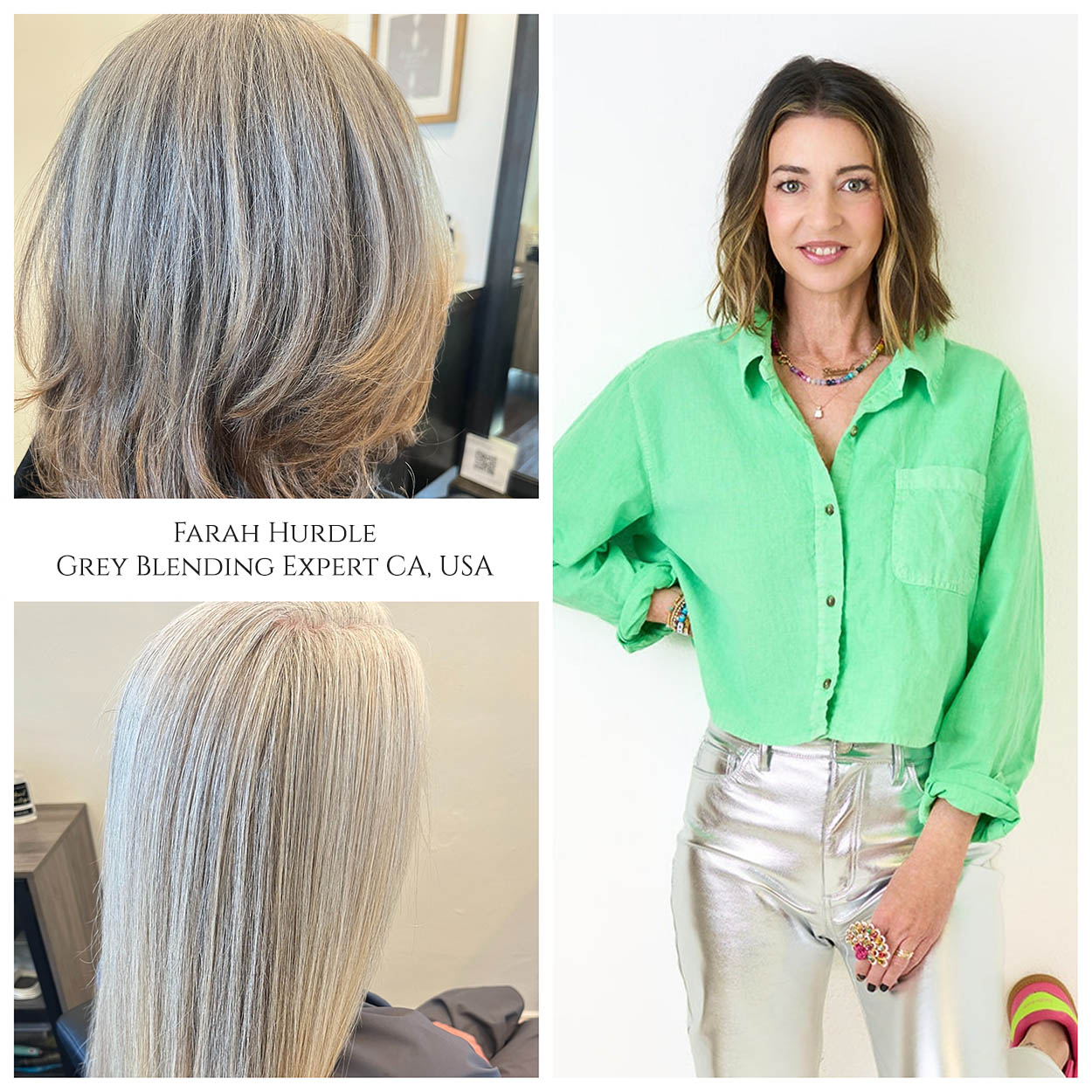
Grey blending is the best way to embrace your natural color gracefully. I love helping women find themselves with this gentle approach. The relationship that we create during the journey is a special bond. I’m grateful for the opportunity to create beauty in a transitional time. ~Farah Hurdle
Grey Friendly Stylists in the UK and EU:
Royal Tunbridge Wells, London, England:
- Rosie Baylis-Strover @rosiebaylishair
- Lizzie Fox @lizziefoxhair
Lower Saxony, Wesendorf, Germany:
- Kristina Herold @herold.kristina
Grey Friendly Stylists in the USA:
San Diego, California:
- Farah Hurdle @greyblending
- Cate Lucas @colorbycate
- Stacey Boshart @staceyboshart
- Lindsay Norsa @axlelocks
- Leighanna Lane @leighannalane
- Sydni Fox @sydni_fox
- Jeanna Allegoren @thesunkissedmane
- Steven Sachs @saxhair
- Amy Smets @soamyrightnow
Sacramento, Ca:
- Marci Jamison @marci_and_the_mane
Las Vegas, Nevada:
- Aysha Lauren Woods @hairbyayshalauren
Hillsboro, Oregon:
- Brittany Scruggs @brittany.hair.artist
Fort Collins, Colorado:
- Ray Hornback @rayvoltagebeauty
Van Meter, Iowa:
- Tabitha Slaughter @tabitha_slaughter_hair
South Dakota:
- Sandra Harens @sandraharenshair
Victor, New York:
- Emily Chen @emchenhair
Special thanks to Farah for sharing her collection of gray hair specialists.
The Cold Turkey Grow-Out: Simpler Than You Think
The most hair-healthy approach is also the most straightforward: stop applying dye to your roots and let your natural color grow in. I know this sounds painfully slow—I ultimately ended up on this route and it was about 20 months for me.
What a grow-out protects:
- Hair integrity and strength.
- Natural shine and texture.
- Healthy cuticle structure.
- Your actual natural color (which you’ll have eventually anyway).
- Your wallet…it’s a free option.
During the transition, you have options: creative cuts that minimize contrast, styling techniques that work with the two-tone look, strategic updos that conceal the demarcation line when you need them, you can also touch up the color keeping it fresh and more intentional, or simply owning the journey. I documented my entire transition, and looking back, those 600-ish days of “funky looking hair” were worth it to reach my silvers intact.
I have a full glossary of all my Gray Hair Transition Posts if you need more help and inspiration.
The Bottom Line
Color removal isn’t wrong—it’s just rarely the solution people hope for. It’s another chemical process that leaves your hair compromised and permanently altered, and it doesn’t eliminate the transition period or restore your natural color. For most people, especially those with longer hair or light natural grays, a strategic approach like gray blending or a protective grow-out preserves hair health while getting you to the same destination.
Here’s something else to consider: trying to fade the dye faster is rather shortsighted. The dye will fade on its own if you’re going through a long grow-out. Accelerating it only means it looks worse as the months pass. Trust me—by the last couple of months of my grow-out, the fade was its own problem to contend with. I wouldn’t want to rush that or draw it out longer than necessary.
Your future silver hair will thank you for whatever path protects its integrity. And if you discover you’ve already permanently stained your grays with DIY attempts or demi/semi-permanent color? The silvers will still be there—they just need time to grow in fresh and undamaged.
Whatever you decide, know that thousands of women in our community have walked this path. You’re not alone, and your beautiful natural silver is worth the wait.
Have questions about your specific transition situation? I’ve been naturally silver for over 11 years and have helped thousands of women through this journey.
Making Your Decision
Still not sure which path is right for you? I built an interactive decision tree to help you figure out the best transition method for your hair, your lifestyle, and your goals. I also have this comprehensive post on How to Transition from Dyed Hair to Natural Gray Hair.
There’s no right or wrong way to transition—there’s only your way. What matters is making an informed choice that protects your hair health and honors where you are in your journey.


I hope you found this post educational and helpful.
Thank you for reading. Please feel free to share.
As always it is about so much more than the hair.

§
Find me on your favorite social media platform. Please remember to engage: comment, like, share, and follow.
Read Another Post
*Affiliate Links:
QuickSilverHair is a participant in the Amazon Services LLC Associates Program. Some of the links on this site are affiliate links to Amazon.com. I earn money as an Amazon Associate from qualifying purchases.
QuickSilverHair is an affiliate with several brands, I earn a small percentage from any qualifying purchases, at no additional cost to you.
© Copyright disclaimer: All content is written by Joli A. Campbell or Guests, that content belongs to QuickSilverHair or the respected author. All Images in this blog belong to the women in the picture, myself, or were used with purchase or commercial permissions. I have used their images and names with their permission. Please do not copy or redistribute anything from this site without further permission. Thank you.
QuickSilverHair.com content disclaimer: content is provided for general information purposes and should not be considered medical advice. Product information is not intended to diagnose, treat, cure or prevent any disease. The hair care content is also for educational use, I am not a hair care professional or dermatologist, please be careful with your hair and skin. If you have any hesitations or concerns speak to your doctor or hair care professional for their support before using any information you find on this site. Be well.
For full Affiliate and Copyright Details Please Read My Terms & Conditions Page